Bring fresh strategy to familiar turn-taking card games with the introduction of three new face cards.
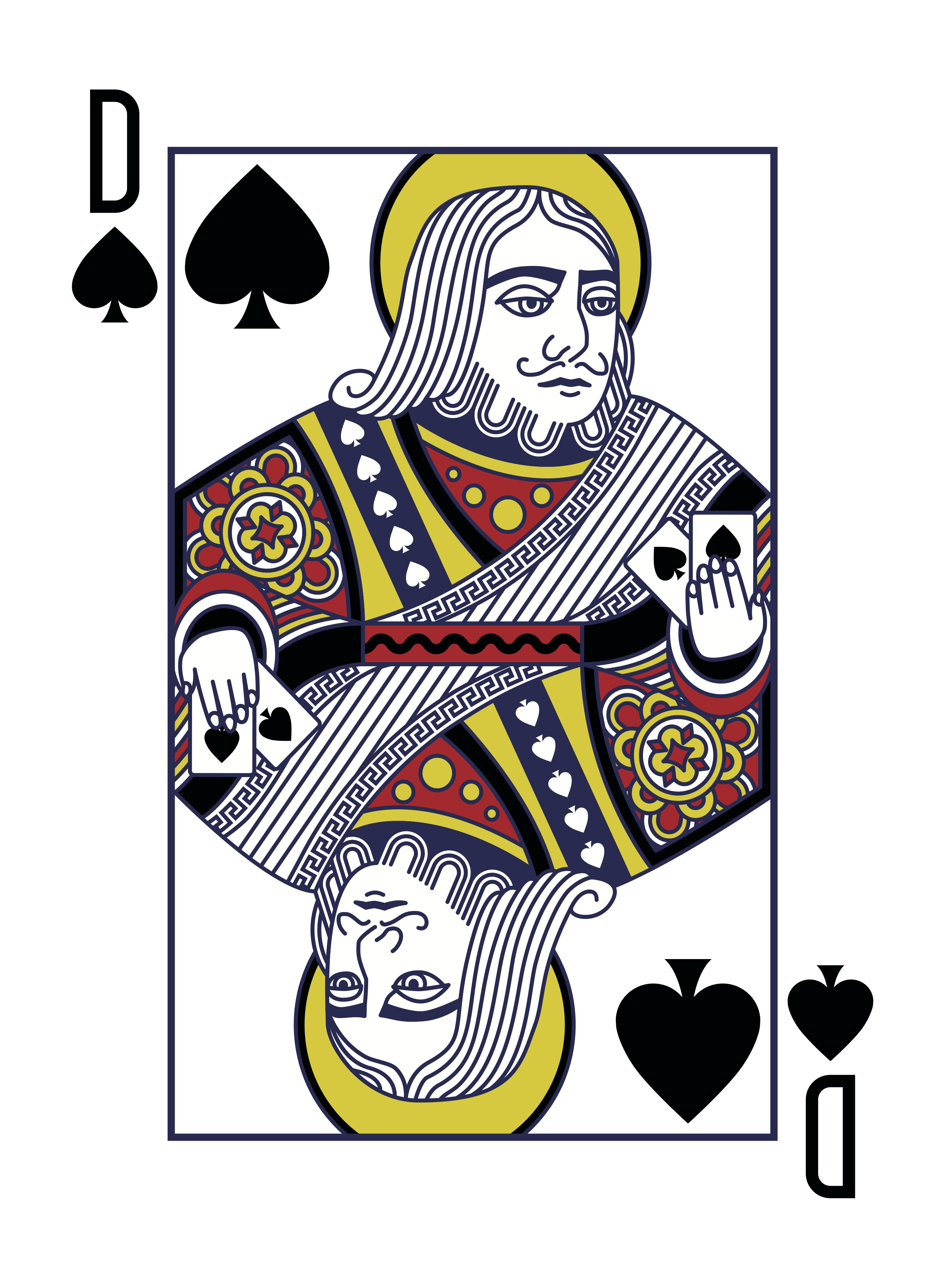
Draw
Draw two or make the next player draw two.
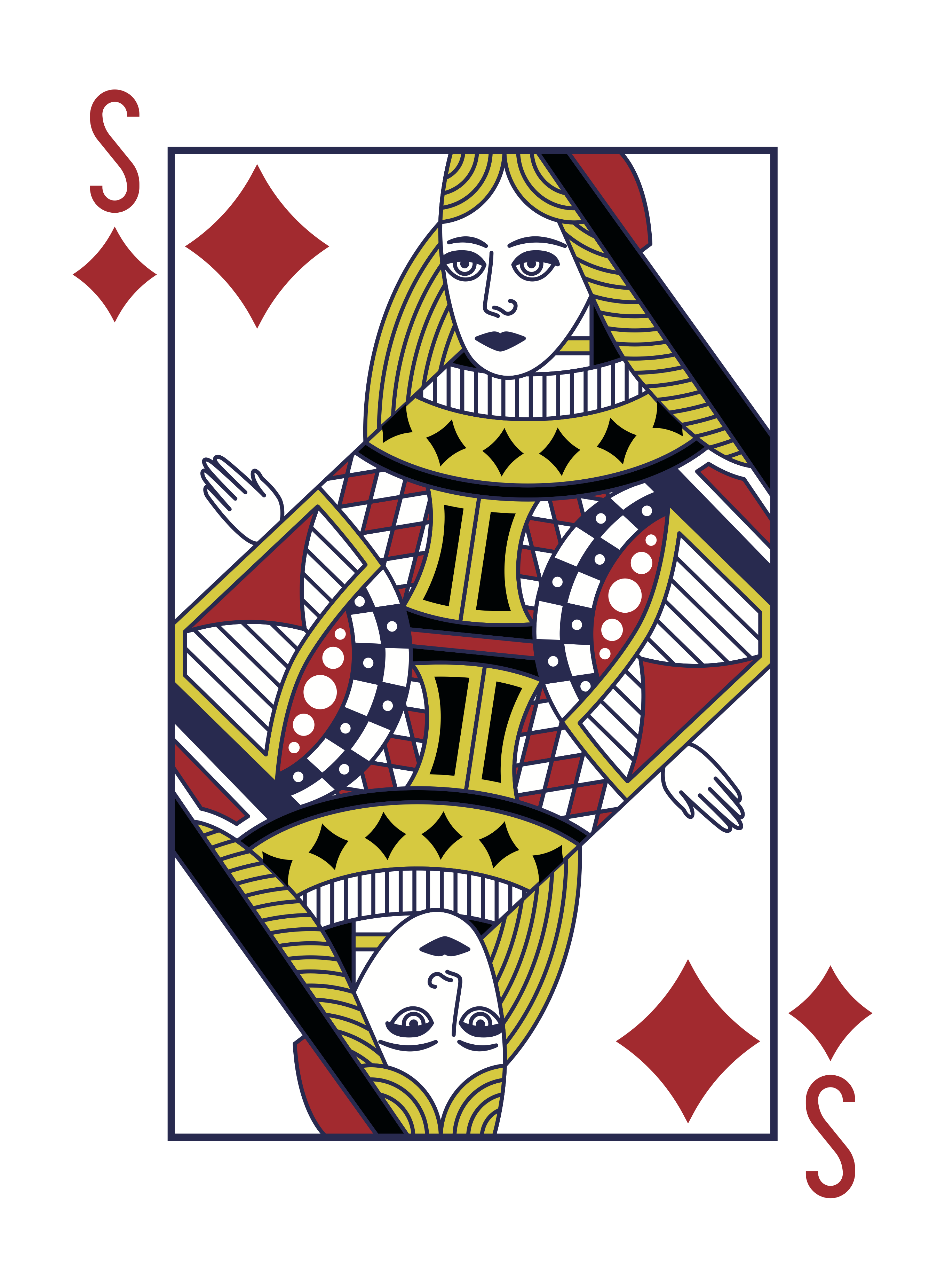
Skip
End your turn or skip the next player's.
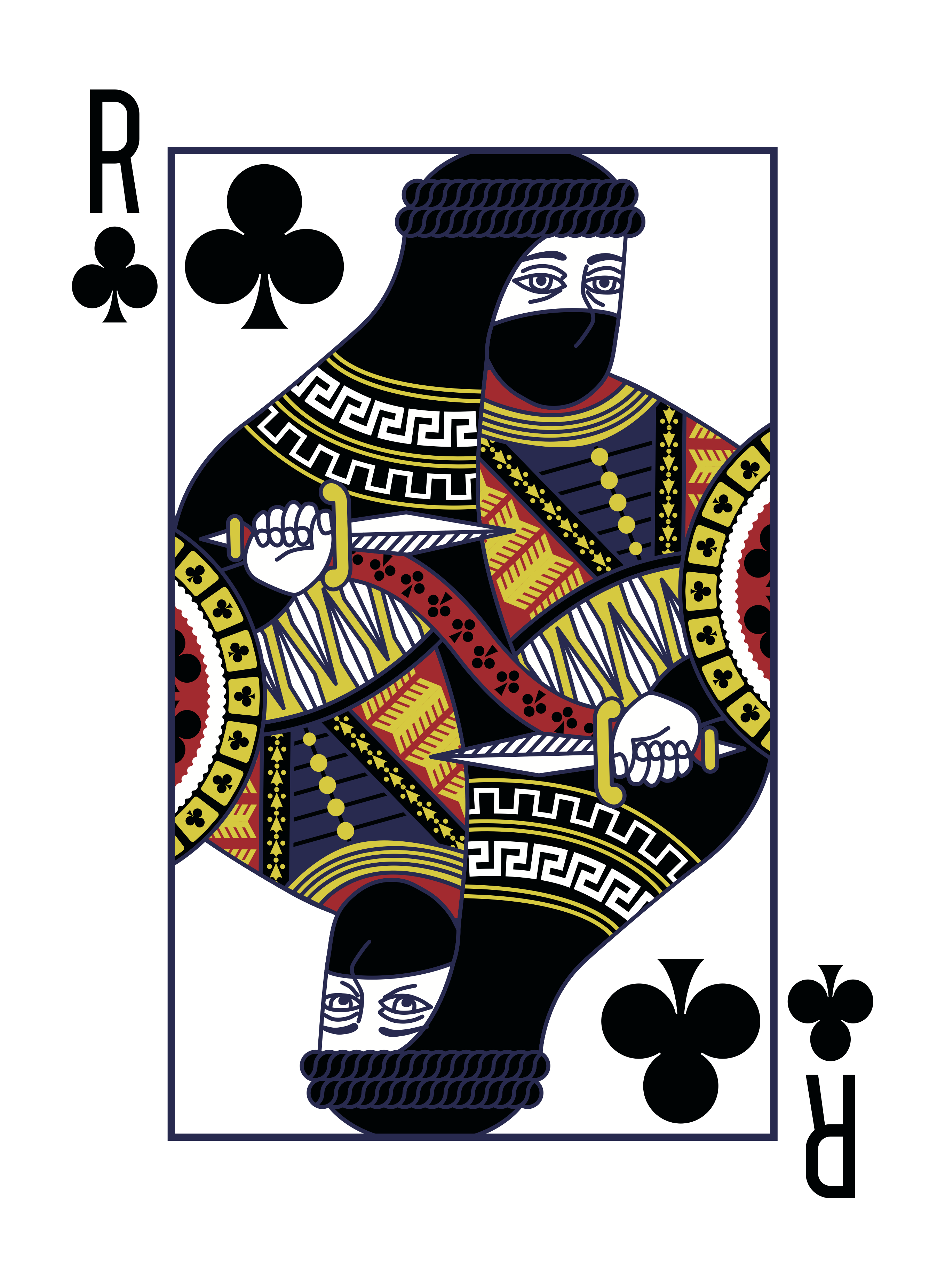
Reverse
Pause and reverse the order of play.
Draw
Draw two or make the next player draw two.
Skip
End your turn or skip the next player's.
Reverse
Pause and reverse the order of play.

Reveal
Reveal a Draw, Reverse, or Skip to affect yourself. The card is replaced when it takes effect.

Play
Play a Draw, Reverse, or Skip to affect the next player. Played cards are not replaced.
Get the deck
Buy
A limited run of 100 Extended Decks are available for sale now. Supplies are limited.
How it works
The Rules
Download rules PDFThe Extended Deck is a 68-card variation of the standard 52-card deck which adds 4 Draw, Reverse, and Skip cards (one of each suit), and 4 Jokers. Any multiplayer, turn-taking card game commonly played with a standard deck can be played with the Extended Deck by applying this uniform set of rules.
Definitions
- Wild cards may represent any card in the standard 52-card deck.
- A wild card may not duplicate another card in a grouping it belongs to (hand, trick, book, etc.).
- A wild card's value is not static.
- A wild card's value may be assumed to be the most beneficial value possible at any time.
- If a wild card's value cannot be determined by the rules of the game, the value is that which the card's player intends.
- The Jokers are necessary for play with the Extended Deck and should not be removed.
- Each Draw, Reverse, and Skip card revealed during a player's turn is immediately redealt in the same way it was dealt.
- A redealt card is no longer in play; it may be removed, put aside, turned face down, etc.
- All redealt cards' effects apply to the player they were dealt to.
- If multiple cards are revealed simultaneously, their effects are cumulative and take place simultaneously.
- If comparing hands to determine a winner, any Draw, Reverse, or Skip cards revealed are redealt before determination.
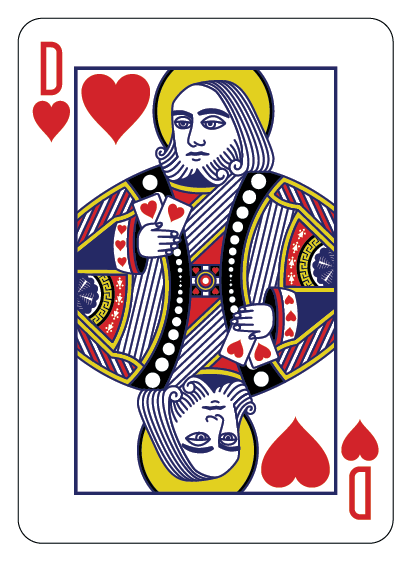
2a · Draw When a Draw is redealt, a second card is dealt to the player in the same manner. If there is no pile to deal from, nothing happens.
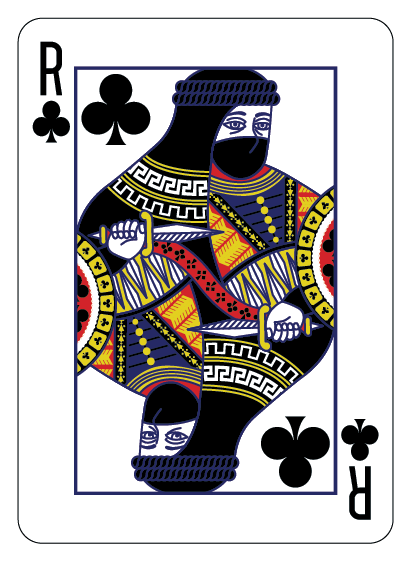
2b · Reverse When a Reverse is redealt, the player's turn is paused and the order of play is reversed. When play returns to the affected player, their turn resumes. Multiple redealt Reverse cards have cumulative effect: any number pauses the turn, an odd number reverses order.
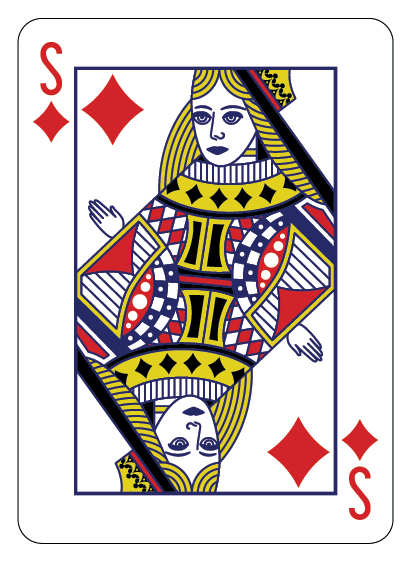
2c · Skip When a Skip is redealt, the player's turn is ended. Multiple redealt Skips have the same effect as one. A Skip revealed with a Reverse does end the player's turn.
- Unlike when revealed, a played card is not redealt, and its effects apply to the next player.
- Played card effects take place in the order they are played. If multiple cards are played simultaneously, their effects take place in the order the player intends.
3a · Draw When a Draw is played, the next player must draw two cards. If there is no pile to draw from, nothing happens.
3b · Reverse When a Reverse is played, the order of play is reversed. The next turn will be that of the first player in the new order whose turn is not ended and is not the affected player.
3c · Skip When a Skip is played, the affected player's turn will end immediately when it begins.
- All Draw cards are redealt as two cards rather than one.
- Then Reverse and Skip card effects apply to players in the order they were dealt, starting with the player whose turn is beginning.
- Draw, Reverse, and Skip cards have standard suits.
- Their ranks are "Draw," "Reverse," and "Skip," which have no value nor position in rank ordering.
- They can be compared to other cards' suits but are disregarded in decisions regarding rank order.
When beginning a game, consider the rules regarding any aspect which the Extended Deck modifies: the number of cards in the deck, the number and nature of face/letter cards, and the presence of wild cards. Some typical clarifications:
6a Games which begin by dealing out the entire deck may (but need not) begin by dealing the usual number of cards instead. This creates a draw pile, enabling Draw cards to have effect; undealt cards may make some games unwinnable or introduce the concept of a misdeal; rules regarding "all cards" apply only to cards in play.
6b Games with ordinarily equal hand sizes that play until all hands are depleted must play to the same specific number of turns or rounds ordinarily played, since Draw cards can change the size of individual hands.
6c Wild cards can cause ties.
Game-specific notes
Baccarat
The dominant form of Baccarat is Punto Banco but the rules apply identically to Chemin de Fer and Baccarat à Deux Tableaux. Baccarat with an Extended Deck is no longer dealer-advantaged!
- Jokers are wild, representing the card that makes the hand total closest to 9 without duplicating another card in that hand. Rule 1
- Revealed Draw, Reverse, and Skip cards are redealt to the hand on the hand's turn when revealed. Their effects take place when redealing is complete. Rule 2
- Draw cards are redealt as two cards instead of one. Rule 2a
- Reverse cards pause the hand's turn and reverse the order of play. This can lead to the Dealer playing first! Rule 2b
- Skip cards end the hand's turn, forcing a stand. Rule 2c
- Because drawing rules are fixed in Punto Banco, if a Skip or Reverse results in the Dealer hand playing first, the Dealer hand plays as the Player and vice versa. Rule 6
Beggar My Neighbor
Also applies to Egyptian Ratscrew, the game's slapping variant.
- Jokers are wild; the player must declare its value after playing it. Rule 1
- Optional: deal 52 cards to create a draw pile. Rule 6a
- The letter cards (Ace, King, Queen, Jack) are the only pay cards. Draw, Reverse, and Skip are face cards but not pay cards. Rule 5
- Optional: paying with a non-pay face card ends pay with no winner. Rule 6
- When paying a pay card, any Draw, Reverse, or Skip cards played take effect after payment is complete in the order they were played. Rule 3
- A Draw played causes the next player to draw 2 cards if possible. Rule 3a
- A Reverse played reverses order of play; in a 2-player game it skips the next player's turn. Rule 3b
- A Skip played skips the next player's turn. Rule 3c
Blackjack
Blackjack with an Extended Deck is no longer dealer-advantaged!
- Jokers are wild, representing the card that makes the hand total closest to 21 without duplicating another card in that player's hand. Rule 1
- Draw, Reverse, and Skip cards are redealt to a player immediately when their turn begins. Card effects take place when redealing is complete. Rule 2
- Draw cards are redealt as two cards instead of one, potentially causing a bust! Rule 2a
- Reverse cards pause the player's turn and reverse the order of play. This can lead to the Dealer playing before other players! Rule 2b
- Skip cards end the player's turn, forcing a stand. Rule 2c
- Scoring suggestion: to restore dealer advantage, payout blackjacks 6:5.
Bluff
Also known as Cheat, Bullshit, or Doubt It.
- Some variants proceed in rank order. Draw, Reverse, and Skip have no place in rank order, so they may be played face-down as a bluff but always fail a challenge. Rule 5
- Begin by dealing the number of cards normally dealt from a standard deck so that Draw cards can have effect. Rule 6a
- Jokers are wild. In a single-card challenge, a Joker always wins. In multi-card challenges, Jokers may not duplicate another revealed card. Rule 1
- Plays of five or more cards of the same rank always fail a challenge. Rule 1
- Players may reveal Draw, Reverse, or Skip cards from their hand — these are redealt and affect that player. Rule 2
- Redealt Draw cards are redealt as two cards instead of one. Rule 2a
- Redealt Reverse cards reverse order of play without causing the player to pass their turn. Rule 2b
- Redealt Skip cards cause the player to pass their turn. Rule 2c
Bridge
Contract Bridge with the Extended Deck adds intriguing new strategy to a classic.
- Begin by dealing 52 cards so Draw cards can have effect. Rule 6a
- The thirteenth trick is the final trick. Rule 6b
- Jokers are wild. They may not duplicate another card in the trick they are played in. Jokers never trump the Ace of the trump suit. Rule 1
- On the dummy hand's first turn, revealed Draw, Reverse, and Skip cards are redealt and affect the dummy player. Rule 2
- Draw cards played in a trick cause the next player to draw 2 cards at the beginning of their turn. Rule 3a
- Reverse cards played in a trick pause the next player's turn and reverse order of play. Rule 3b
- Skip cards played skip the next player's turn; that player does not play a card in the current trick. Rule 3c
- A trick containing multiple cards of the winning suit but none with an ordered rank is not won by any player. Rule 5
Crazy Eights
The classic shedding game and inspiration of the Extended Deck, now with new twists.
- Jokers are wild. The player must declare a Joker's value as one of the standard 52 cards when played. Rule 1
- The special effects of the standard 52 cards remain in effect alongside the new ones. Rule 6
- Players may not play another Draw card on a Draw to avoid drawing; drawing from a played Draw does not end the affected player's turn. Rule 3a
- Players may reveal any Draw, Reverse, or Skip cards from their hand — redealt during that turn, affecting that player. Rule 2
Go Fish
Go Fish with new card types and wild cards makes interesting situations arise in an otherwise predictable game.
- Jokers are wild. Jokers may not duplicate another card in the book they belong to. Five-of-a-kind books are not possible. Rule 1
- Players can request Draw, Reverse, or Skip cards. Books of four of them grouped by rank are possible. Rule 5
- A book of Draw cards causes the next player to draw 8 cards. Rule 3a
- A book of Reverse cards (even number) has no effect. Rule 3b
- A book of Skip cards skips the next 4 players. Rule 3c
- Players may reveal Draw, Reverse, or Skip cards — redealt and affecting that player. A redealt card makes a book of that rank impossible. Rule 2
Hearts
Trick-taking with hearts scoring and the Extended Deck.
- Begin by dealing only 52 cards, creating a draw pile. The thirteenth trick is the final trick. Rules 6a & 6b
- Jokers are wild. They may not duplicate another card in the trick they are played in. Jokers never trump the Queen of Spades. Rule 1
- Draw cards played in a trick cause the next player to draw 2 cards at the beginning of their turn. Rule 3a
- Reverse cards played pause the next player's turn and reverse the order of play. Rule 3b
- Skip cards played skip the next player's turn. Rule 3c
- The Draw, Reverse, and Skip of Hearts are Hearts — they incur points and are necessary to shoot the moon. Rule 5
- A trick containing multiple cards of the winning suit but none with an ordered rank is not won by any player. Rule 5
Old Maid
The classic pairing game with new cards is pretty different and a little broken.
- During setup, a single Queen is removed and one remaining Queen is the Old Maid — the only card that may not form a pair. Rule 6
- Deal all 68 cards. Leaving a draw pile is likely to create an unwinnable game. Rule 6a
- Jokers are wild. They may be paired with any card except the Old Maid. Rule 1
- When a pair of Reverse cards is played, they cancel out, having no effect. Rule 3b
- When a pair of Skip cards is played, the next 2 players' turns are skipped. Rule 3c
- A pair of Draw cards has no effect without a draw pile. Rules 3a & 6a
Poker
Maybe the most fun with the Extended Deck. Applies identically to five- and seven-card Stud, Draw, Texas Hold'em, Omaha, Chicago, and other varieties.
- Jokers are wild. Jokers may not duplicate another card in the player's hand. Multiple players may hold the same exact hand. Rule 1
- Community Draw, Reverse, and Skip card effects take place in the order dealt. Rule 4
- Community Draw cards are redealt immediately as two cards, laid overlapping. Rules 2a & 5
- Community Reverse cards change who acts first. Community Skip cards each skip the next player's turn, forcing those players to check the opening bet. Rule 4
- A player's revealed Draw, Reverse, or Skip cards are redealt during that player's turn. Rule 2
- A revealed Skip ends that player's turn without a fold until they face new action — effectively a free call! Rule 2c
- At showdown, hands are revealed and Draw, Reverse, and Skip cards are redealt. Draw cards become two cards. Rule 2
President
Also known as Asshole, Butthead, or Capitalism.
- Jokers are wild. Jokers may not duplicate another card they are played with. Five-of-a-kind plays are not possible. Rule 1
- Players may lead with one or more Draw, Reverse, or Skip cards, but cannot play them at any other time due to their unordered rank. Rule 5
- If led by Draw, Reverse, or Skip cards, players may continue by playing the same number of any ranked cards on them, or pass. Rules 5 & 6
Rummy
Applies to Contract Rummy, Gin Rummy, and all Rummy variants.
- Jokers are wild. Jokers may not duplicate another card in a meld. Five-of-a-kind melds are not possible. Rule 1
- Jokers in hand at game end are scored as the lowest card possible in that hand. Rule 1
- Draw, Reverse, and Skip cards can be melded together (same rank) but not into a run. They are worth 10 points each. Rule 5
- A Draw discarded causes the next player to draw 2 cards before any other action. Rule 3a
- A Reverse discarded pauses the next player's turn and reverses order of play. Rule 3b
- A Skip discarded skips the next player's turn. Rule 3c
- Players may reveal Draw, Reverse, or Skip cards — redealt during that turn, affecting that player. Rule 2
Spades
Trick-taking with trump spades and the Extended Deck.
- Begin by dealing only 52 cards, creating a draw pile. The thirteenth trick is the final trick. Rules 6a & 6b
- Jokers are wild. They may not duplicate another card in the trick. Jokers do not trump the Ace of Spades. Rule 1
- A Draw played in a trick causes the next player to draw 2 cards at the beginning of their turn. Rule 3a
- A Reverse played pauses the next player's turn and reverses order of play. Rule 3b
- A Skip played skips the next player's turn; that player does not play a card in the current trick. Rule 3c
- A trick containing multiple cards of the winning suit but none with an ordered rank is not won by any player. Rule 5
- Scoring suggestion: cards still held after the final trick may be scored as overtricks (bags).
Try it out
Game Demos
Joker's are wild, Draw improves your hand, Reverse makes you last to act, and Skip calls without paying the bet!
Look for Reverses in player hands that could make the Dealer play first. Skip is an automatic stand, Draw might make you bust, and always hit with a Joker.
Tell us what you think
Give Feedback
Played with the Extended Deck? Please give us your feedback. It's very valuable and will take almost no time.
Give Feedback